Preserved Moss: A Natural Material for Indoor Art
What Preserved Moss Is and How It Works
Preserved moss is natural moss that has been treated to stay soft, green, and alive-looking without needing water, soil, or light. Unlike dried moss that becomes brittle and turns brown, preserved moss keeps its color and texture for years with almost no care. The preservation process replaces the moisture inside the plant cells with a plant-based glycerin solution, which holds the cell structure and color in place. This makes it a practical material for interior art because it does not wilt, shed, or attract pests.
The result is a stable, tactile surface that feels like living moss but behaves like a long-lasting decorative element. People use it in wall panels, framed pieces, and standalone art objects. Since the moss no longer photosynthesizes, it will not grow or change shape over time. That predictability is one reason designers and homeowners find it appealing for indoor spaces.
Why Preserved Moss Suits Interior Art
Interior art often needs to balance visual impact with maintenance. A painting needs a frame and occasional dusting. A plant needs watering, pruning, and the right light. Preserved moss sits somewhere between those two. It offers a natural, organic look without the ongoing care that living plants require. That makes it a good fit for rooms where you want greenery but cannot provide constant attention.
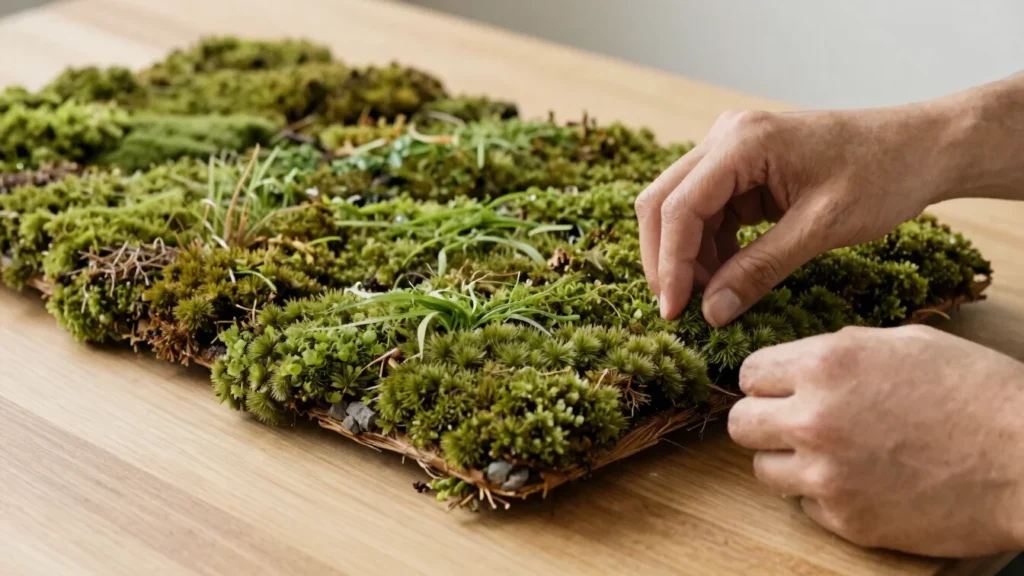
Moss art materials like sheet moss, cushion moss, and reindeer moss each bring different textures and shades of green. Sheet moss lies flat and dense, good for covering large areas. Cushion moss forms rounded, pillow-like clumps that add depth. Reindeer moss, though technically a lichen, has a branching, airy structure that softens edges. Combined in a single piece, they create a miniature landscape that changes as the light hits the varied surfaces.
Another advantage is the weight. Preserved moss is light, so large panels do not need heavy-duty wall anchors. A typical wood frame with a moss filling can be hung like a picture frame. That simplicity opens up placement options: above a sofa, in a hallway, or even in a bathroom where steam and humidity do not harm the preserved material.
How Preserved Moss Is Made and What to Look For
The preservation process starts with harvesting moss from sustainable sources, often from forest floors or moss farms. The moss is cleaned, sorted, and then soaked in a solution that replaces the water inside the cells. Dyes are sometimes added to intensify or alter the natural green color. After treatment, the moss is dried slowly to lock in the shape. The result should feel slightly springy, not crunchy or sticky.
When choosing preserved moss for an art project, quality matters. Good preserved moss holds its color evenly and does not shed fragments when touched. Lower-quality pieces may have uneven dye coverage or a stiff, unnatural feel. The color palette varies from bright lime to deep forest green, and some suppliers offer dyed options in blue, red, or yellow for accent pieces. For a natural look, stick with undyed or lightly dyed moss in shades that match the room's existing tones.
Surface texture also affects the final appearance. A piece made entirely of one moss type can look flat. Mixing textures - flat sheet moss with bumpy cushion moss and airy reindeer moss - creates visual interest. The frame matters too. A simple wood frame keeps the focus on the moss, while a deeper shadow-box frame gives the piece presence on the wall.
Practical Considerations for Moss Displays
Preserved moss does not need water, but it does need the right environment to stay in good condition. Direct sunlight will fade the dyes over time, so place the art where it receives indirect light or artificial light. High humidity is fine, but standing water or condensation on the surface can cause mold. Avoid hanging moss art in rooms with constant moisture collection, like a shower stall. A steamy bathroom with good ventilation is usually safe.
Dust can settle on the surface, especially on textured reindeer moss. A gentle blast from a hairdryer on the cool setting or a soft brush removes it without damaging the fibers. Do not use water, cleaning sprays, or pressure. The glycerin inside the moss can be pulled out by moisture, leaving a sticky residue that attracts more dust.
How Moss Art Fits Into a Room's Design
Moss art works well as a focal point in a neutral room. A large panel of preserved moss can replace a painting or a mirror, adding a calming natural element. It also pairs nicely with other natural materials like wood, stone, and linen. Because the moss does not need light, it can go in corners or hallways where live plants would struggle.
Some people use moss art to create a living wall effect without the irrigation system. A series of small frames arranged in a grid mimics a vertical garden but requires no plumbing. Others use a single large piece to anchor a reading nook or meditation area. The texture and color bring a sense of calm that works well in spaces meant for relaxation.
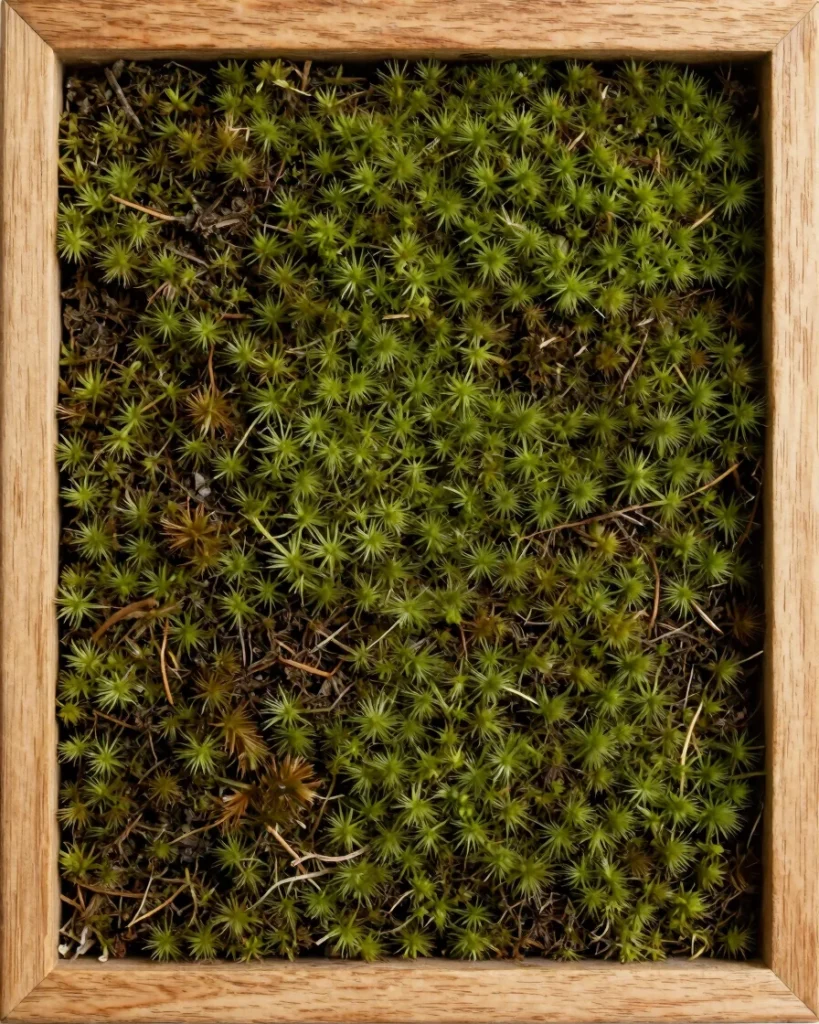
For those who want a custom look, moss art kits let you arrange the materials yourself. You get a selection of preserved mosses, a backing board, and a frame. The assembly is straightforward: you glue the moss onto the backing, fill the frame, and let it set. The result is personal and avoids the mass-produced feel of some store-bought decor.
How It Compares to Other Wall Decor Options
A canvas print gives you color control but no texture. A live plant wall gives you texture but requires watering, fertilizing, and occasional replanting. Preserved moss sits in the middle: it has the texture of nature and the longevity of artificial decor. It does not change with seasons, and it never needs to be replaced unless you want a new look.
The cost is higher than a poster but lower than a custom living wall. Over time, the lack of maintenance costs can make it more economical than live plants, which need water, soil, and replacement when they die. For a one-time investment, you get a piece that stays the same for years.
One trade-off is that preserved moss is not alive. It does not clean the air or produce oxygen the way living plants do. If that matters to you, consider mixing preserved moss art with a few live houseplants in the same room. The preserved piece provides the texture and the live plants handle the air quality.
Bringing It Into Your Space
When you are ready to add moss art, start with the room's existing color palette and lighting. Choose a frame that matches your other furniture - dark wood for a traditional look, light wood for a Scandinavian feel, or black metal for an industrial edge. The moss itself can be a single shade of green or a mix of tones. A monochrome piece is quieter; a multicolor piece draws more attention.
Think about scale as well. A small frame can get lost on a large wall, while an oversized panel can overwhelm a narrow hallway. Measure the wall space and visualize the piece in place before committing. Some online retailers offer mock-up images to help with this.
Preserved moss art is not for everyone. If you prefer changing decor frequently, a permanent piece may feel limiting. But if you want a natural element that stays put and asks nothing from you, it is a practical choice. The materials are straightforward, the assembly is simple, and the result brings a quiet kind of life into a room.

At Home, people often look for decor that does not demand constant attention. Preserved moss fits that brief. It adds texture and color without the schedule of watering or the worry of dying plants. For a room that needs a calming presence, it is a solid option.
Moss art materials like sheet moss and reindeer moss are easy to work with and available from many craft suppliers. Whether you buy a finished piece or build your own, the process is forgiving. Mistakes can be hidden under another layer of moss, and the final result can be adjusted as you go. That flexibility makes it a good project for beginners and experienced crafters alike.
Back at Home, a moss wall art piece becomes part of the daily environment. It does not yell for attention. It sits there, quiet and green, and over time it becomes a normal part of the room. That is the appeal: something natural that does not need to be managed. For anyone who likes the look of plants but not the work, preserved moss art is worth considering.